
PVC Modified


PRODUCT INTRODUCTION
Poly(vinyl chloride) (PVC) is a rigid and glassy material. It can be obtained in several forms, depend on the method prepared. The common form is produced by the free-radical polymerization vinyl chloride. PVC resistant to most acids and alkalis, although it is decomposed by sulphuric, nitric and chromic acids. It is soluble in a few organic solvents.
PVC Plastisol is essentially composed of finely ground polyvinyl chloride dispersion resins which are suspended in a liquid plasticizer medium. Plastisol has glass transition temperature below room temperature thus this product is rubber-like at normal temperature.
The properties of products made from plastisol depend on the type and content of plasticizer, the particle size of the PVC resin, the polymerization technique and curing conditions such as temperature and time. Because of this, plastisol is widely used as coating compositions for metals and other substrates, as adhesives, and as sealing materials.
PROPERTIES
| Item | SB BIND – 1011 | Testing Method |
| Appearance | Cream | Visual |
| Solid Content (%) | Min. 98 | Oven 150 °C, 30 min |
| Viscosity (cPs) | 70,000 – 120,000 | Brookfield RV, Spindle No. 7, 20 rpm @30 °C |
| Density (g/cm3) | 1.55 ± 0.1 | Density Cup |
PACKAGING
SB BIND – 1101 is packed in 300 kgs netto open top metal drums.
SAFETY & HANDLING
Do not take internally. Practice good personal hygiene to avoid ingestion. FOR PROFESSIONAL USE ONLY. KEEP OUT OF CHILDREN'S REACH.
STORAGE
Store sealed in a cool, dry, well-ventilated area. Keep receptacle tightly sealed. Open and handle receptacle with care. Avoid contact with eyes, skin and clothing.
BY TYPE
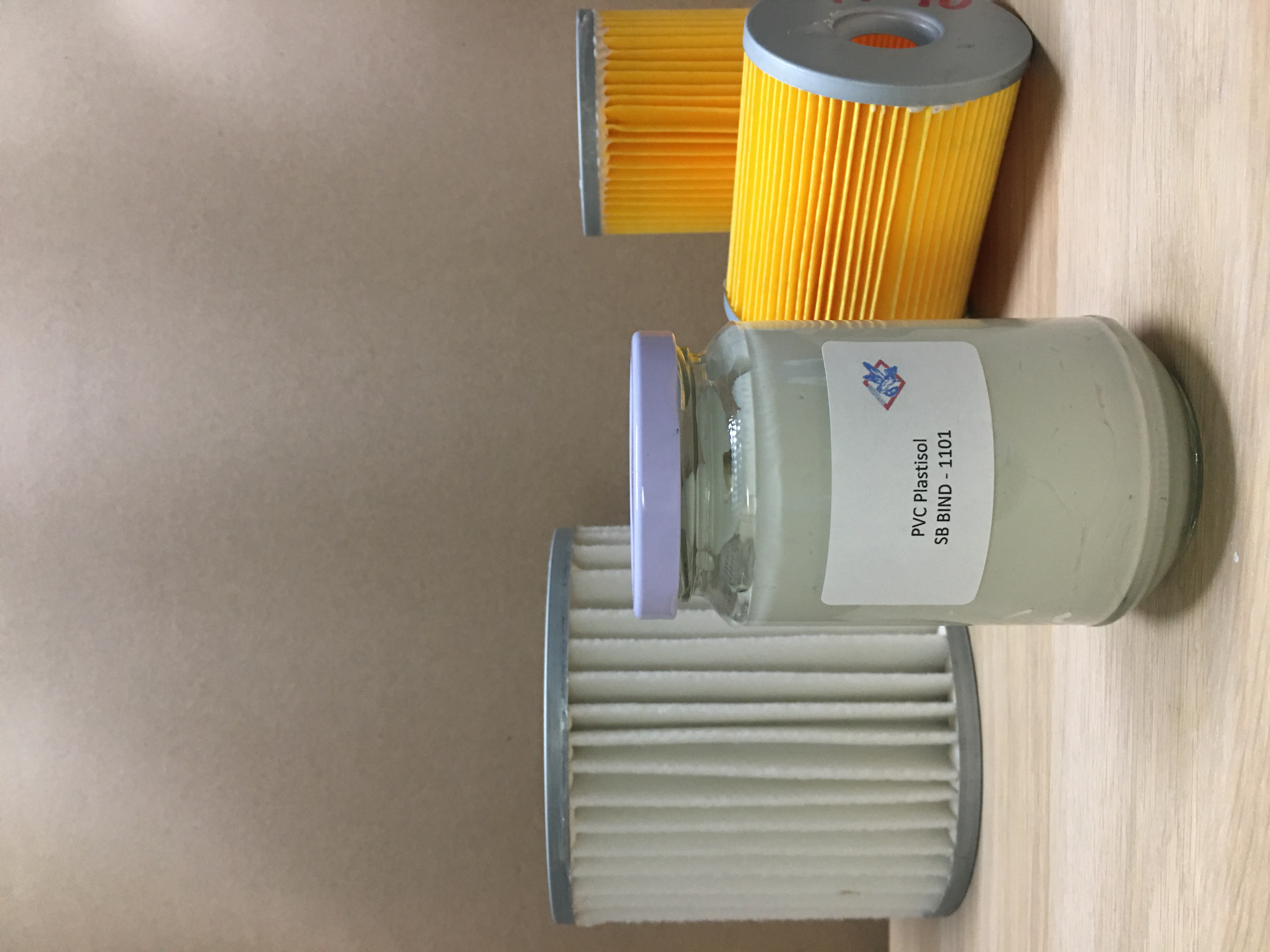
SB BIND – 1101
SB BIND – 1101 is dispersion of Polyvinyl Chloride resin in plasticizer designed for filter automotive application. Its performance characteristics include high permanent bonding.
BY APPLICATION
Construction
Superplasticizers are water-soluble organic substances that reduce the amount of water needed to achieve a certain concrete stability, reduce the water-cement ratio, and reduce cement consumption, increase slump and workability.
Produce high quality concrete, with low permeability (more impermeable to water). It can reduce water the use of water becomes less, the distribution of cement particles in the fresh concrete mix becomes more optimal, which in turn produces concrete with a better density so that it is more watertight.
Construction for highways, railways, subways and tunnels. Also for self-compacting concrete, precast and pre-stressed concrete.
Automotive
Plastisol is widely used in the automotive industry such as in automotive air and oil filters. Plastisol provide strong adhesion to a number of endcap materials, including steel, aluminum and polyester. It chemically provide outstanding stability while maintaining filter performance, even under extreme conditions.
Textile Ink
In textile ink application, Plastisol used as ink. Plastisol the most common used inks for printing designs onto textiles. Plastisol inks are recommended for printing on colored fabric. On lighter fabric, plastisol is extremely opaque and can retain a bright image for many years with proper care.
Coating and Waterproofing
Plastisol is widely used in coating such as dip coating, wire basket coating, etc. In waterproofing application such as repairing cracks in bituminous layers, sealing cracks, waterproofing roofs, etc
